Somewhere between the lanyard and the LinkedIn request, the paper business card lost the plot.
It still gets printed by the box. It still gets pressed into palms at conferences. But ask anyone honest: most of those cards are in a coat pocket, a hotel drawer, or a landfill within seventy-two hours. The handshake happened. The follow-up didn't.
ClickCard is one of the platforms that decided this was a software problem, not a stationery problem. Founded in 2018, it now serves more than 200,000 professionals and 500+ companies across 50+ countries. That's enough scale to suggest the shift isn't a fad. This is a complete walkthrough of what's actually in the app in 2026, what it costs, and where it fits.
The original case for going digital was sustainability. Trees, landfill, the usual. That argument is still true and still uninspiring.
The case that actually moves people is performance. A paper card is a one-way object: you give it, and you have no idea what happens next. A digital business card is a channel. The same tap that hands over your phone number can open your portfolio, queue up a Calendly link, save your contact, and log the interaction. All before the small talk ends.
Three things change once your card is software:
It updates in place. Change jobs on Tuesday, and every card you've ever shared reflects the new title by Tuesday afternoon. No reprints. No crossed-out emails.
It carries more than text. A tap opens a live profile with links, video, booking, social. Recipients pick how they want to engage instead of squinting at a phone number.
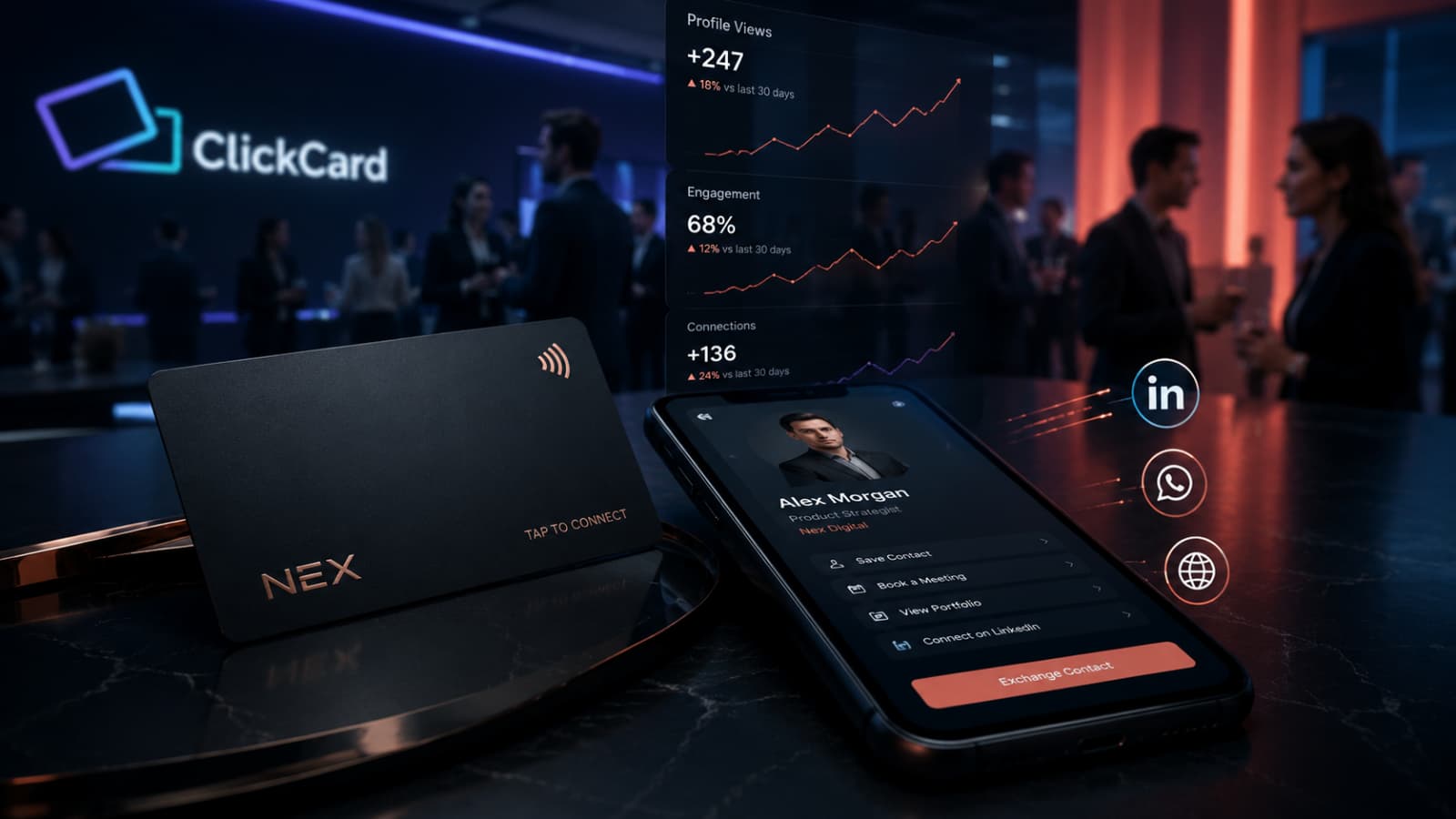
It's measurable. You see views, taps, saves, and where they came from. Networking finally has a feedback loop.
That third one is what separates ClickCard from a fancier vCard. The whole product is built around the idea that a share is a data point, not a courtesy.

A business card is only as good as the moment of handoff. ClickCard supports the full range of how that moment actually plays out.
NFC tap. Hold your phone or a physical ClickCard NFC card against another phone, and your profile opens on their screen. No app required on the receiving end. The link resolves in their browser. NFC cards are an optional add-on, not a paywall: ClickCard sells PET and laser-engraved wood versions, but you don't need one to use the platform.
Dynamic QR codes. Every profile generates a high-contrast QR with optional brand color and logo overlays. Drop it in an email signature, a slide deck, a storefront window, or a name badge. The destination is the same live profile, so updates flow through without reprinting anything. There's also a dual-QR feature designed for presentations: one for your contact, one for whatever you're showing.
Universal link. Your card lives at a personal URL (clickcard.me/yourname). Send it through WhatsApp, LinkedIn DMs, a follow-up email, an SMS. Anywhere a link works. No NFC required, no app required, no operating system caveats.
Apple Wallet and Google Wallet. Save your card to your wallet for one-tap access from the lock screen. There's also an Apple Watch share view for the genuinely committed networker.
Home screen widgets. Pin your QR to the home screen so sharing takes zero navigation. This is small, and it matters more than it sounds. Friction at the moment of share is what kills most digital tools.
vCard and PDF export. Recipients can save to their contacts in one tap, with fields correctly mapped. For formal exchanges (proposals, partner onboarding), the card exports as an interactive PDF.
Paper card scanner. And because people will still hand you paper cards for the next ten years: ClickCard's AI scanner reads them and pulls name, email, phone, and title into a digital contact. Useful if you'd rather walk out of an event with a clean address book than a stack of cardstock.

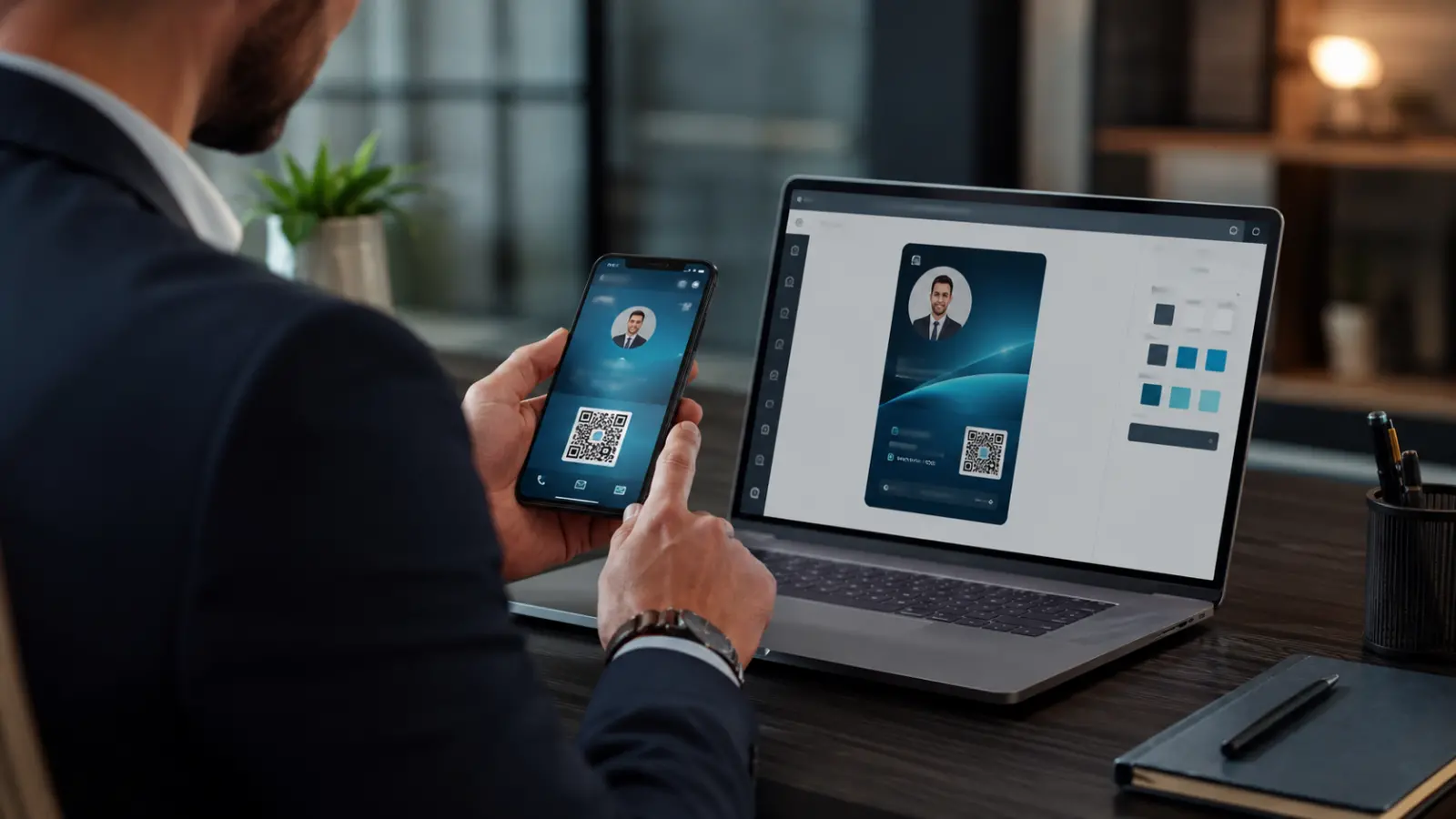
A card is a mini landing page. ClickCard's branding controls are deep enough for designers and forgiving enough for everyone else.
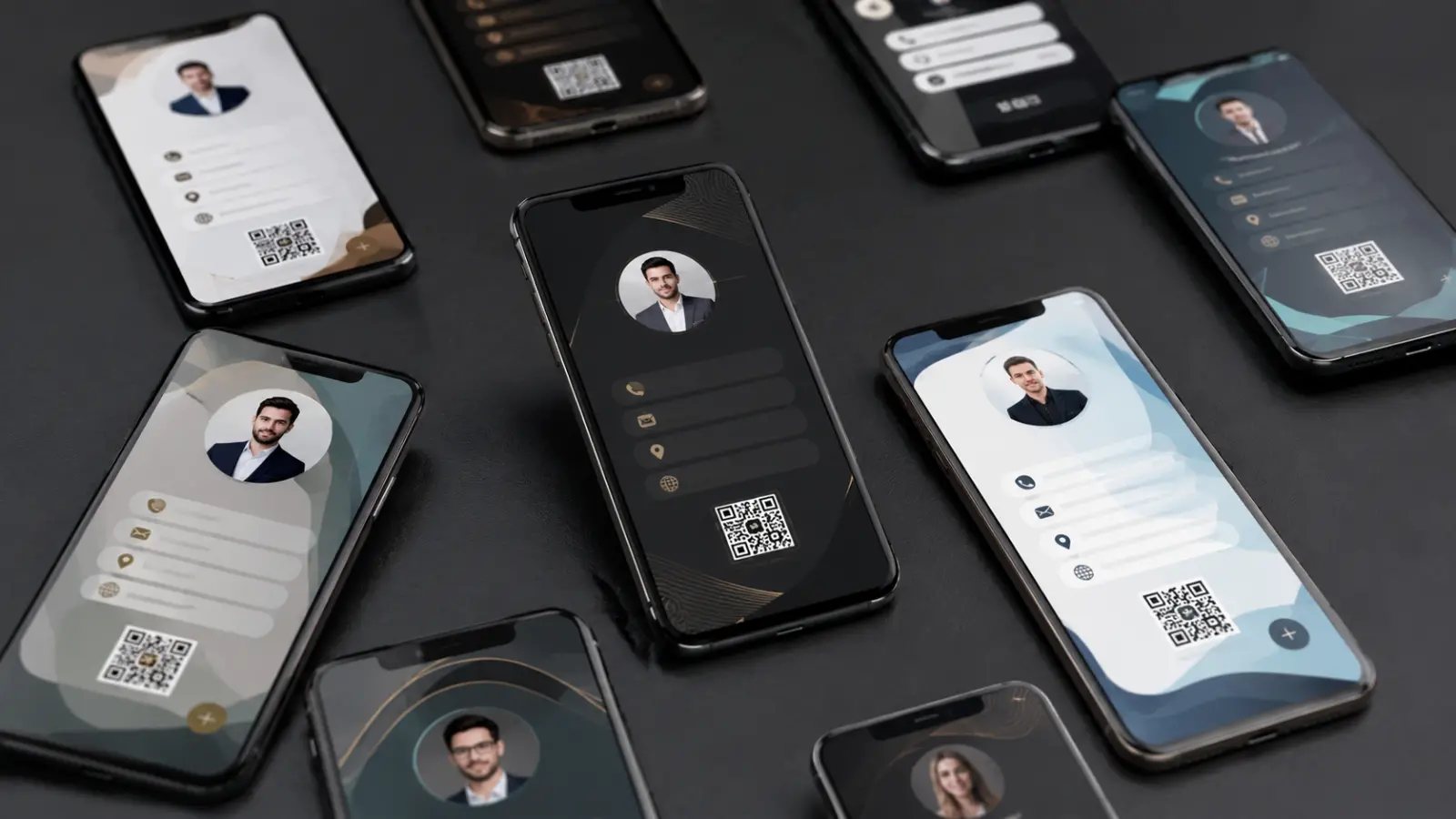
You get 130+ free templates spanning corporate, creative, real estate, healthcare, hospitality, and consulting. Pick one, swap in your details, you're live in a few minutes. Or start from a blank canvas if you have strong opinions about typography. Browse the full library on the features page.
Color, font, layout, button style, and section order are all editable. Add a logo, a headshot, and a cover image, and visitors recognize who they're connecting with before they read a single word. (Visual recognition is genuinely a useful predictor of follow-up. People remember faces and logos better than job titles.)
Social aggregation pulls every channel into one place: LinkedIn, Instagram, X, YouTube, TikTok, GitHub, Behance, Spotify, Calendly, WhatsApp Business, and the long tail. Visitors pick where to engage; you stop losing leads to "I'll find you later."
You can also create unlimited cards under one account. Day job, side project, conference persona, second language. Switch between them per context. It's the feature that quietly justifies the upgrade for anyone juggling more than one professional identity.

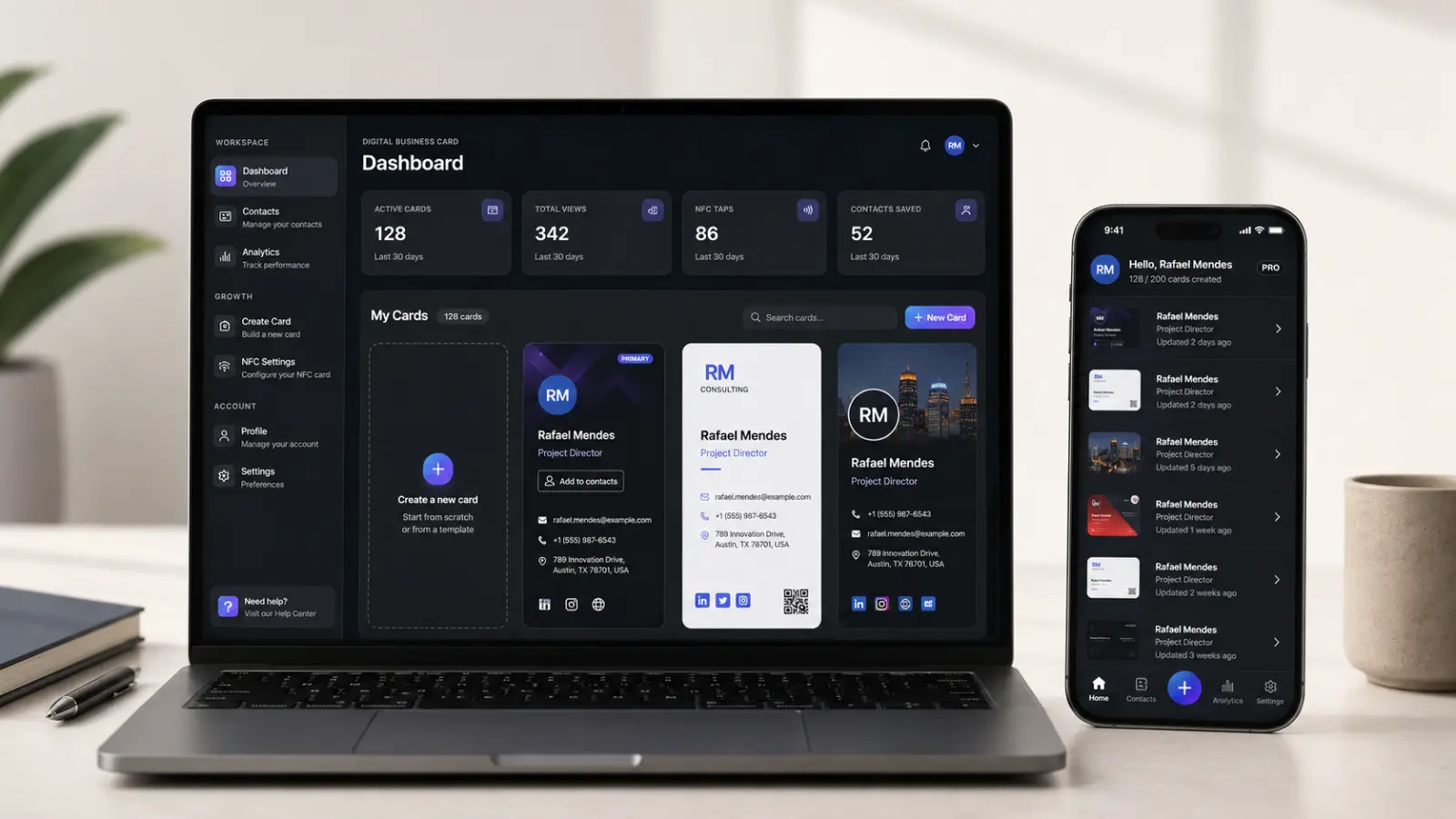
The dashboard is where ClickCard stops being a contact app and starts being a tool.
You see total views, when they happened, and what actions followed: contact saves, calls, website opens, social follows. Every link is tracked individually, so you can compare which channels actually get clicked. If your portfolio gets ten times the clicks of your X profile, that's a signal about where to spend your energy.
The Metrics dashboard also surfaces geographic reach (where in the world your card is landing) and custom date ranges, so you can isolate the impact of a specific event or campaign. Peak engagement times show up too, which matters more than it sounds. Most people send follow-ups when they have a free moment, not when their recipient is most likely to respond. These connection insights are the foundation for a smarter outreach strategy.
One honest note: ClickCard doesn't tell you who viewed your card. It tells you what happened. That's a deliberate privacy choice, and it's the right one. But if you were hoping for stalker-grade visitor identification, this isn't that product.
For companies, ClickCard scales into a brand-enablement platform.
Admins manage every employee's card from a centralized dashboard. New hire? Their card is ready before day one. Departure? Revoke access in a click. The brand-template system lets you define a master design (colors, logo placement, locked fields) and let employees fill in only their personal information. Your brand stays consistent across hundreds of cards with no design oversight bottleneck.
Custom company designs are available for teams that want something built around their visual identity rather than a template; ClickCard's design team builds it, then deploys it across the organization.
Bulk rollout via CSV import means you can stand up a fifty-person sales team in an afternoon instead of a week. And the analytics roll up. Admins see top-performing cards, lead capture rates, and engagement trends across the whole team, not just individuals.
CRM integration closes the loop: leads captured at events flow straight into your pipeline, tagged with the right campaign and owner. Your team stops typing business cards into spreadsheets and starts following up the same day. Lead capture forms turn event-day conversations into two-way exchanges: a visitor's details flow into your system the same day, not three weeks later when someone gets around to data entry.
Sharing your contact info shouldn't feel risky. A few controls worth knowing:
Granular field visibility. Pick what's public, what's hidden, and what unlocks only after a recipient leaves their own info. Useful for trade-show lead capture.
Encrypted data storage and secure sharing. ClickCard's standard posture for the platform.
GDPR-ready data handling. Built with international data protection standards in mind, which matters for teams in regulated industries.
The free ClickCard plan covers what most professionals need: card creation, NFC and QR sharing, customization, and essential analytics. Premium plans unlock advanced analytics, team features, and custom branding. There are also optional NFC card options (PET or engraved wood). To check all details, available options, and team conditions, just visit the pricing page.
The key thing here, and the thing that separates ClickCard from a few competitors: you don't have to buy hardware to use the platform. The card is the software. The NFC card is a nice physical add-on if you want one.

Conference networking. Sales teams swap a lanyard full of paper for one NFC tap. Every interaction is logged, attributed, and ready for follow-up before the team leaves the venue.
Field sales and on-site visits. Real estate agents, insurance brokers, and field reps share at the door, then see who reopened the link in the days after. A clean signal of who to call back first.
Creators and freelancers. Designers, photographers, and consultants use the card as a portable portfolio. Cover image, work samples, calendar booking, one-tap save. The card replaces a website for first impressions.
Customer-facing teams. Restaurants, salons, and clinics put a QR at the front desk. Guests save the contact, follow socials, leave a review, or book the next appointment in seconds.
Multilingual professionals. Build a card per language and switch by context. Lisbon in the morning, Mexico City after lunch, New York in the evening. No reprints, no second batch.
Setup takes less than a coffee order:
Download the app from the App Store or Google Play, or sign up at clickcardapp.com.
Pick a template, or let our team build a custom one for your company.
Add your details: name, role, company, photo, contact methods, links.
Customize colors, fonts, and layout to match your brand.
Share via NFC, QR, link, vCard, or PDF.
Watch the metrics and refine over time.
The first share takes about ten seconds. Most of the value compounds after that.
No. Your card opens in any browser. The app is for you, the owner.
No. NFC tap is one of several sharing methods. You can share by QR, link, vCard, or PDF using only your phone. The physical NFC cards ($30) are optional.
You see views, taps, saves, geographic reach, and engagement trends, but not personal identities of viewers. That's a privacy choice, not a missing feature.
Yes. Centralized dashboard, brand templates, bulk imports, CRM integration, and team-level analytics are designed for rolling out cards across an organization. ClickCard reports 500+ enterprise customers.
Yes. The free plan includes card creation, NFC and QR sharing, customization, and core analytics. Premium starts at $3.99/month. Compare plans on the pricing page.
Paper is static, untrackable, and outdated the moment your role changes. ClickCard is dynamic, measurable, and updates everywhere instantly. One digital card replaces hundreds of printed ones over a career.
Networking has quietly become a software category. The handshake hasn't changed. Everything that happens in the ten seconds after it has.
Create a free card, share it at your next meeting, and watch what the data tells you. The point isn't that paper is dying. It's that the thing replacing it is finally good enough to be worth using.
Download ClickCard on the App Store or Google Play, or sign up at clickcardapp.com.